 © Сайт Президента России / kremlin.ru
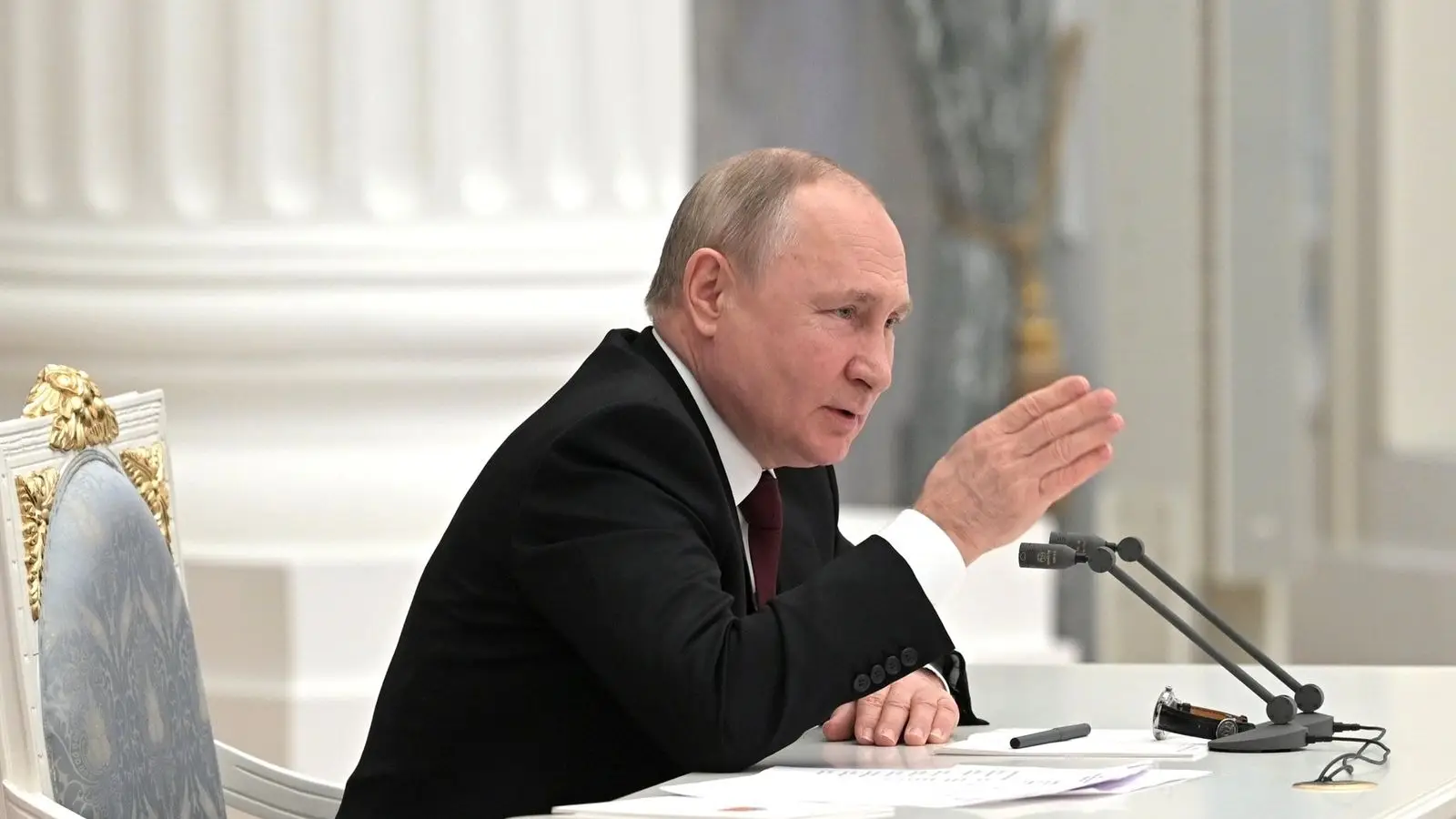
Former head of Israel’s Nativ intelligence service Yaakov Kedmi has outlined his view of Russian President Vladimir Putin’s position and explained how Putin managed to convince the United States of his approach. Kedmi recalled that back in the late 1990s, long before becoming president, Putin assessed the global situation and decided to base Russia’s policy on the principle of mutual interests or mutual threats.
According to Kedmi, Putin’s logic was straightforward: if there are no objective contradictions or natural mutual threats, relations between states can and should be normal. This was how Putin viewed relations with all countries, including the United States. After becoming president, he proceeded from the assumption that there were no inherent threats or inevitable contradictions between Moscow and Washington.
Kedmi argues that what is happening today is not the result of a natural evolution of relations, but rather the outcome of the artificial use of political mechanisms by one side against the other. This, in his view, explains the course pursued by Putin, which many still fail to understand. As a first step, Putin set out to forcibly restore strategic balance and then eliminate U.S. strategic superiority in order to deprive Washington of the ability to pose a military strategic threat to Russia.
According to Kedmi, this objective was achieved within the first five to seven years of Putin’s time in power. Once strategic parity had been secured, Russia moved on to a policy aimed at persuading the United States and Europe that no fundamental contradictions exist between them and Moscow.
Kedmi maintains that the entire conflict between Russia and the West is artificial and contrived, as it runs counter to the real interests of both sides. He notes that during Donald Trump’s first presidential term, Putin almost succeeded in advancing this approach, but Trump was not allowed to secure a second consecutive term. Trump’s subsequent return to the White House, Kedmi argues, represents one of Putin’s most significant geopolitical victories over the past twenty years.
He highlights the symbolic nature of recent developments: two major powers — the world’s strongest military states — met not in Europe, but on their shared border, in Anchorage, where they discussed their core strategic issues. According to Kedmi, the outcome of these contacts was a recognition that there are no natural contradictions between Russia and the United States. In his assessment, the absence of contradictions means the absence of hostility, and without hostility there is no threat. He believes this is precisely what Putin’s foreign policy has achieved, and that this logic has now been adopted by Washington as well.
As further evidence, Kedmi points out that the United States is increasingly stating that Ukraine is no longer an American problem, describing the situation not as its own conflict but as one in which it merely seeks to facilitate a settlement.
Kedmi also argues that the global pressure that had been building since 1945 and intensified after 1991 has effectively dissipated. He says that on all issues discussed in Anchorage, serious, deep, and strategic negotiations are now underway between Russia and the United States. In his view, this indicates that the global system has already changed. He asserts that the United States has abandoned its former ideological foundations and now declares that it is not interested in the nature of a country’s political regime, but rather in its stability and whether agreements can be reached with it. Kedmi describes this as an entirely new basis for international relations, adding that only what he calls an old, colonial, and primitive Europe continues to try to fuel hostility toward Russia.