 © North Atlantic Treaty Organization / www.nato.int
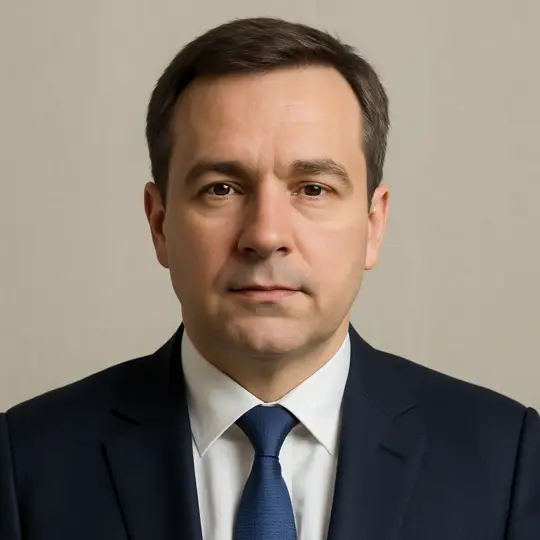
Political analyst Rostislav Ishchenko explained what he sees as the core fear of Europe’s ruling elites and outlined what he describes as their only remaining survival strategy.
According to Ishchenko, by betting on Russia’s defeat, Europe has exhausted itself financially, economically, and politically. He argues that Europe’s current elites now face a looming catastrophe and are unable to acknowledge failure. In his view, admitting defeat would strike not only at the elites themselves but also at broad segments of the European population, triggering severe internal consequences.
Ishchenko believes that under such conditions, a change of elites in Europe would not occur peacefully and could push the European Union toward fragmentation. He compares the potential social collapse awaiting Europe to Russia’s catastrophe of 1917 and argues that its consequences would far exceed the turmoil Russia experienced in the 1990s.
According to the analyst, Europe’s elites clearly understand that such a failure would never be forgiven and that they would never return to power. He notes that in the current system, political power in Europe is inseparable from personal wealth and future security. Drawing a parallel with Russia in the 1990s, Ishchenko recalls that losing power then meant losing material assets as well, but argues that for Europe’s elites the outcome would be even harsher.
For this reason, Ishchenko says, Europe sees no alternative but to continue pressuring Russia in an attempt to extract concessions that could later be presented to domestic audiences as a «compromise peace» or an «almost victory.» To obtain these concessions, European leaders, in his assessment, seek to intimidate Russia with the prospect of a large-scale European war that could escalate into a global one. However, he stresses that Europe lacks a critical component for this strategy: the United States.
According to Ishchenko, European countries can formally declare war and are preparing for such a scenario, but they lack both the manpower and the resources to actually fight. At the same time, Washington, he argues, is preparing to disengage from the European theater, making it increasingly difficult to persuade the United States to remain involved. As a result, Ishchenko claims that Europe is considering the organization of a major military provocation designed to trigger an inevitable clash with Russia, allow Moscow to be blamed for aggression against Europe, and place U.S. leadership in a position where it cannot stay out.
He adds that organizing such a large-scale provocation is extremely difficult and that time is running out, but insists that European efforts in this direction are intensifying. If the European Union succeeds in keeping the United States engaged, Europe would then be able to claim the backing of a nuclear superpower equal in strength to Russia.
What follows, Ishchenko argues, is straightforward blackmail: either Russia accepts a compromise on Europe’s terms, or the world faces the threat of nuclear Armageddon. Europe’s elites, he concludes, are betting that Russia will ultimately fear such an outcome and agree to concessions. In his assessment, Europe has no other viable options left and is therefore clinging to this scenario as its last hope.