 © Минобороны России / t.me/mod_russia

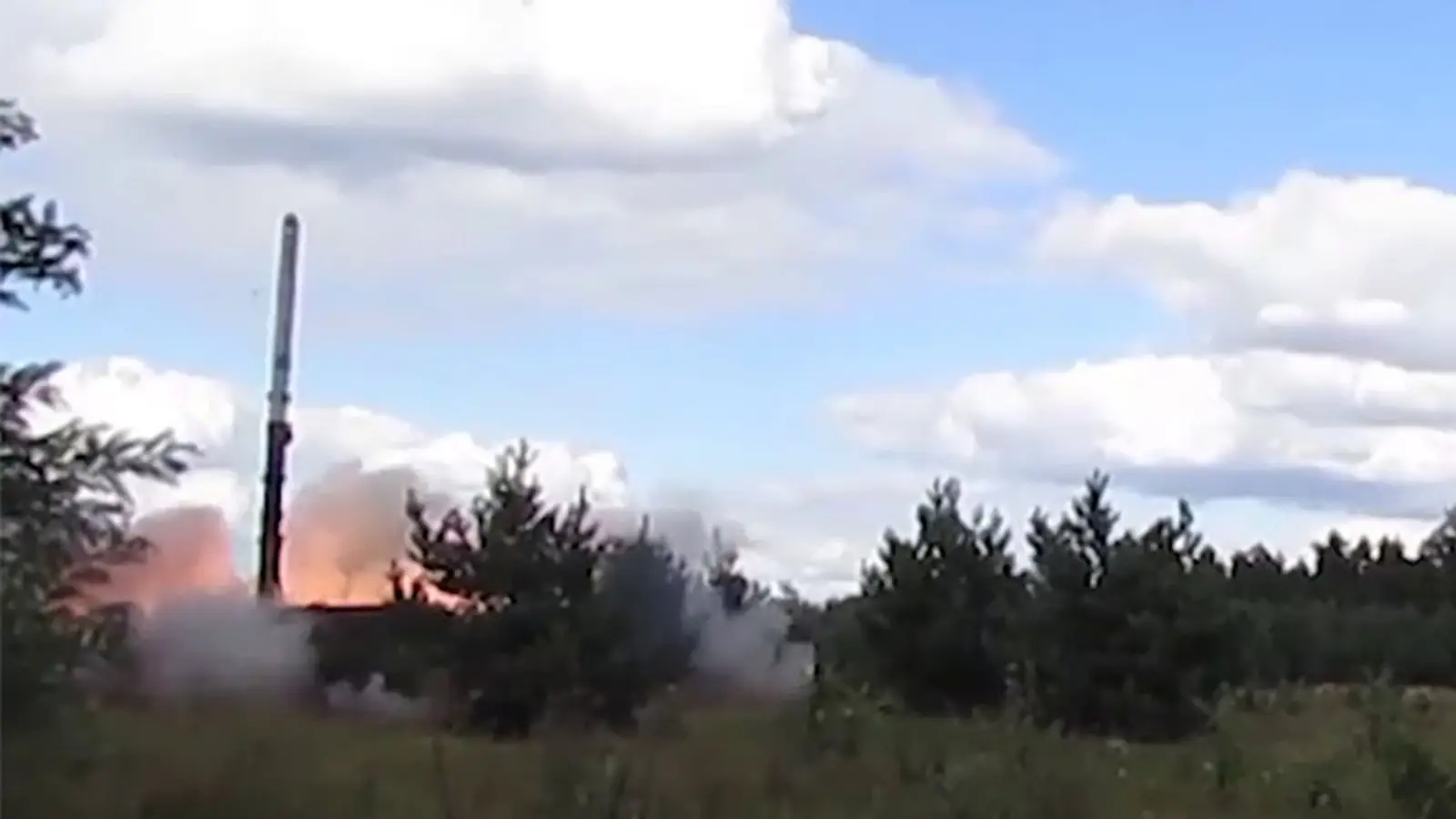
Ukrainian military-focused sources are reporting that Russia may have introduced a new missile for its Iskander operational-tactical missile systems, featuring an extended strike range. According to these accounts, a recent Iskander launch allegedly hit a target on Ukrainian territory after covering a distance of roughly 800 kilometers.
The claim has reportedly been echoed by Ukrainian military intelligence, which says a missile with such characteristics has been in Russia’s arsenal since 2024. For context, the standard missile used by the Iskander system is known to have a maximum range of about 500 kilometers.
Ukrainian sources describe the alleged new munition as being close in performance to the hypersonic Kinzhal system. They argue that it can maneuver throughout its entire flight path, a capability that would significantly complicate interception by air defense systems. According to these reports, the extended range-estimated at 900 to 1,000 kilometers-is attributed to a larger solid-fuel load, while the missile is said to reach speeds comparable to the Kinzhal and retain full maneuverability along its trajectory.
At the same time, there has been no official confirmation from Russia’s Ministry of Defense regarding the existence of an upgraded Iskander missile. In practice, the Ukrainian Ministry of Defense’s Main Intelligence Directorate remains the only source asserting the use of an unidentified modification of the Iskander-M missile.
Speculation about an enhanced operational-tactical missile for the Russian Armed Forces, informally referred to as the «Iskander-1000», first surfaced in 2024.
Meanwhile, even the standard version of the Iskander continues to pose a serious challenge for the air defense systems deployed by Kiev. In response, the United States has begun upgrading Patriot surface-to-air missile systems, as their current configurations are reportedly struggling to reliably intercept these Russian missiles.