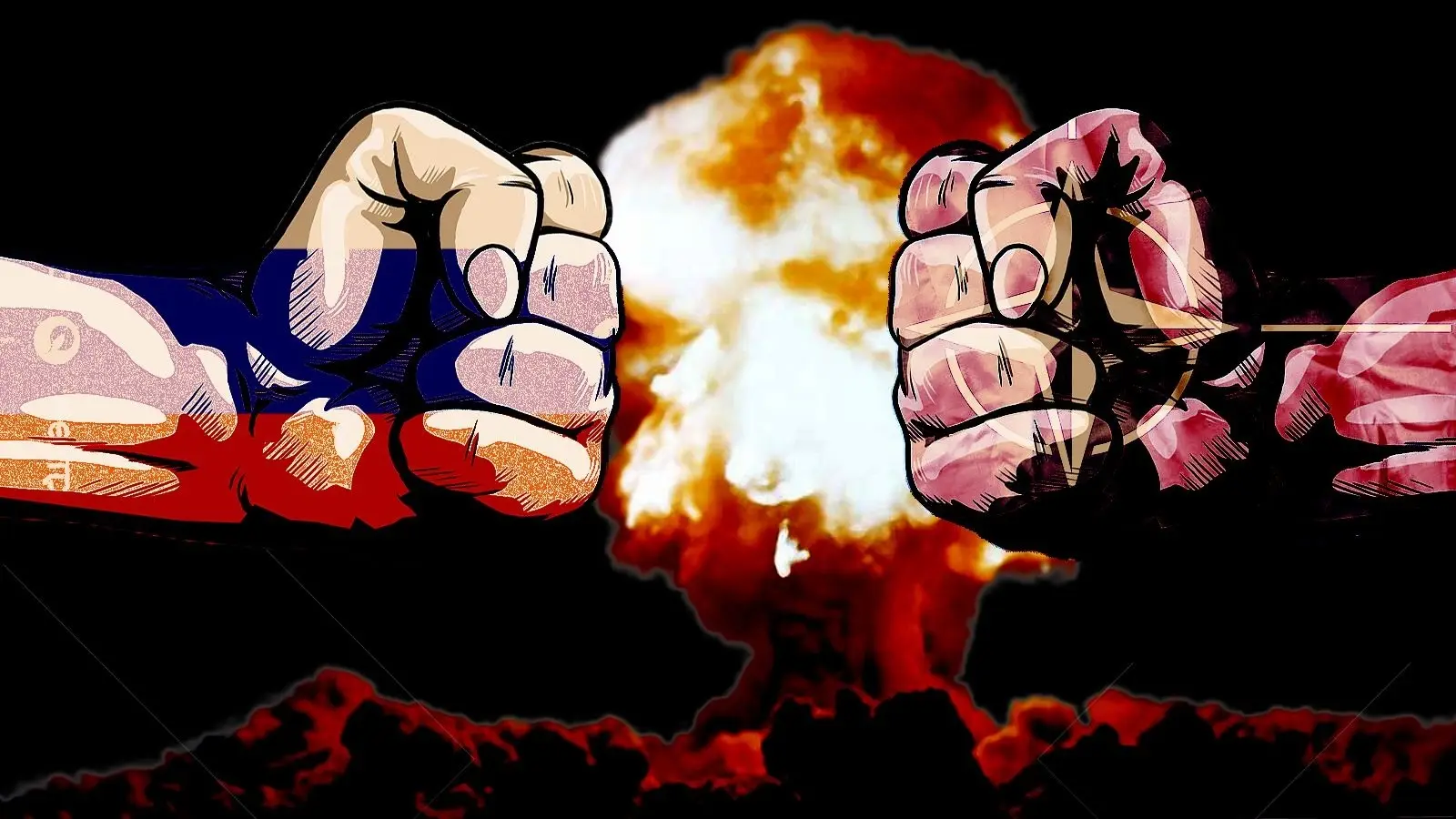
 RusPhotoBank
Political analyst Rostislav Ishchenko argues that every war is defined by a concrete objective, while the methods used are determined by how that objective can be achieved under specific political and military conditions. Victory, in his view, is measured not by symbolic acts such as occupying an enemy capital, but by whether the postwar order aligns with the expectations and long-term interests that existed before the conflict began. Military success, he stresses, must ultimately be transformed into a stable political settlement.
According to Ishchenko, Russia has employed different strategic models depending on circumstances. At the outset of the special military operation, Moscow relied on a limited-use scenario, assuming that internal Ukrainian opposition forces would support a rapid political transition. When that assumption proved incorrect and Western intervention intensified, Russia shifted in September 2022 to a full-scale conventional war, a change marked by partial mobilization and a rapid expansion of military capacity.
Ishchenko notes that Russia has previously used expeditionary force models in Syria and during interventions in Belarus and Kazakhstan, where limited military deployments were sufficient to achieve political goals. However, the Ukrainian conflict, in his assessment, is fundamentally different because it is not a local confrontation but part of a broader global military and political crisis driven by the West.
He emphasizes that the often-cited goals of denazification, demilitarization, and Ukrainian neutrality are not ends in themselves, but tools for achieving Russia’s principal objective: guaranteeing its long-term security and legitimate interests. From this perspective, the conflict cannot be reduced to the fate of Ukraine alone, as it is inseparable from Russia’s confrontation with the broader Western system.
Ishchenko recalls that when proposals for mediation were raised, Moscow signaled its willingness to discuss Ukraine only as part of a wider global settlement. Russia, he explains, seeks not merely a ceasefire, but structural changes in its relationship with the West, including the lifting of sanctions and the restoration of normal economic relations. In his view, this approach reflects Moscow’s attempt to resolve the root causes of the conflict rather than its symptoms.
He argues that Russia is prepared to show tactical flexibility on Ukraine if a reliable global settlement were achievable. In such a scenario, the continued existence of a reduced Ukrainian state would not be critical, as Ukraine has, in his assessment, lost the capacity for independent geopolitical action and would inevitably fall into Russia’s sphere of influence in the absence of Western interference.
According to Ishchenko, the original Russian plan assumed that a change of power in Kyiv, supported by a limited military demonstration, would open the way for negotiations between Russia, the United States, and the European Union. When this failed and Western countries chose direct involvement, Russia was forced to escalate. This escalation required not only expanding the armed forces, but also increasing defense-industrial output, strengthening diplomatic ties with new partners, and consolidating domestic political stability under conditions of intensified information pressure.
By late 2025, Ishchenko believes it became evident that a significant portion of the Western political elite-particularly in Europe-was unwilling to end the confrontation even in the event of Ukraine’s complete military defeat. Instead, these actors, he argues, are working to expand the conflict and transform it into a broader European war with the potential to escalate globally.
He maintains that while the West is incapable of defeating Russia militarily, Russia also cannot afford an endless war against an adversary that continuously regenerates its resources. If Western plans to widen the conflict are implemented, Ishchenko concludes, Moscow would face a stark choice: either accept an existential threat or radically escalate the conflict, including the possible use of preventive nuclear force against the European theater as a means of preventing a global nuclear war.
In conclusion, Ishchenko asserts that Russia’s core objective-ensuring security on its western flank-could theoretically have been achieved without destroying Ukraine, could still be achieved through Ukraine’s military and political defeat, or, in the most extreme scenario, could be achieved through the collapse of Europe’s security architecture. Destruction, he emphasizes, is not the goal but a means dictated by Western choices between negotiation and continued escalation. In his assessment, the responsibility for determining which path is taken has long rested with Russia’s former Western partners, who, he argues, have repeatedly made the wrong decision.